Humanities
Geography
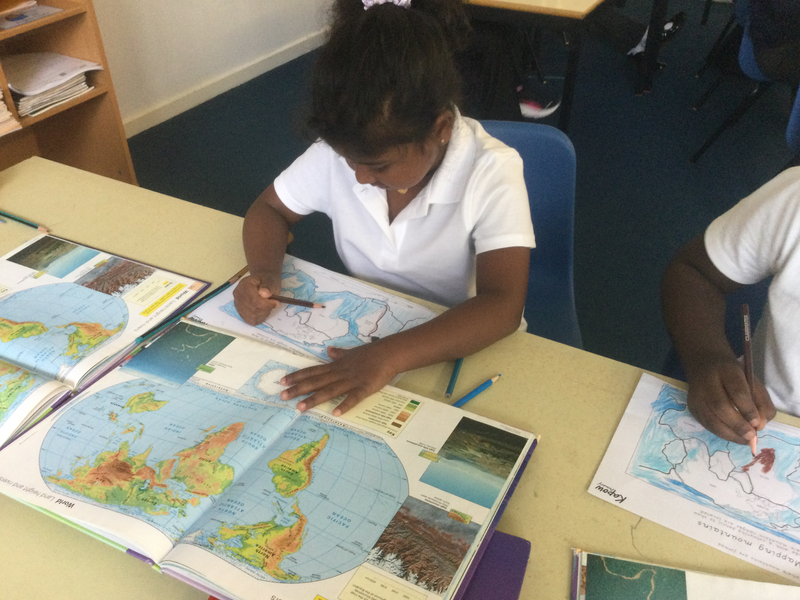
At our school, our Geography curriculum aims to spark children’s natural curiosity and inspire them to explore the world around them with enthusiasm and confidence. Through the Kapow Primary scheme, we encourage pupils to think like geographers by asking meaningful questions, observing their environment carefully and developing an understanding of how people and places are connected at local, national and global scales.
We want our children to become confident investigators who can question, measure, record and analyse geographical information, using these skills to deepen their understanding of the world. Fieldwork plays an important role in this, giving pupils the chance to practise collecting real data, using maps and digital tools, and presenting their findings in clear and purposeful ways. These hands‑on experiences help them understand not just what is happening in the world but why it is happening.
Our curriculum places equal emphasis on geographical knowledge and practical skills. Children learn about places close to home and far away, developing a strong sense of their own locality and how it compares to other regions of the world. As they move through the school, they build their understanding of key concepts such as climate, biomes, natural processes and human
impact, while growing increasingly confident in using geographical vocabulary.
Above all, we aim to nurture thoughtful, responsible young citizens who recognise how geography shapes our lives and who feel empowered to care for the planet. By developing curiosity, critical thinking and an understanding of human and physical processes, we hope our pupils leave us with the skills and confidence to make informed decisions and contribute positively to the world around them.
History
At our school, our History curriculum is designed to inspire children to become curious, creative and thoughtful learners who enjoy exploring the past. Through the Kapow Primary scheme, we aim to nurture young historians who ask questions, think critically and build a rich understanding of significant events, people and civilisations from Britain and around the world.
We want pupils to develop the confidence to examine historical evidence, analyse different sources and make sense of how and why things have changed over time. By learning about a diverse range of societies and individuals, children begin to appreciate the complexity of people’s lives and the relationships between different groups throughout history. This helps them develop empathy, understand different perspectives and recognise the lessons we can learn from the past.
A strong sense of chronology is woven through the curriculum, helping children understand where events and people fit within the wider historical timeline. As they move through the school, pupils build a secure “mental timeline,” which allows them to see connections, contrasts and trends across different periods. They also learn how historians study the past and construct accounts, gradually developing the skills needed to carry out their own historical enquiries.
Our curriculum introduces pupils to key historical concepts, including power, invasion, settlement and migration, civilisation, empire, religion, trade, achievements of humankind, society and culture. These ideas reappear across different units throughout the school, allowing children to deepen their understanding of these big themes in a range of historical contexts.
Above all, we aim for our pupils to develop a genuine interest in the past, a respect for different cultures and communities and a curiosity that encourages them to explore and ask questions. By the time they leave us, we hope they will feel informed, reflective and confident in their ability to make sense of the world—both past and present.